MACD
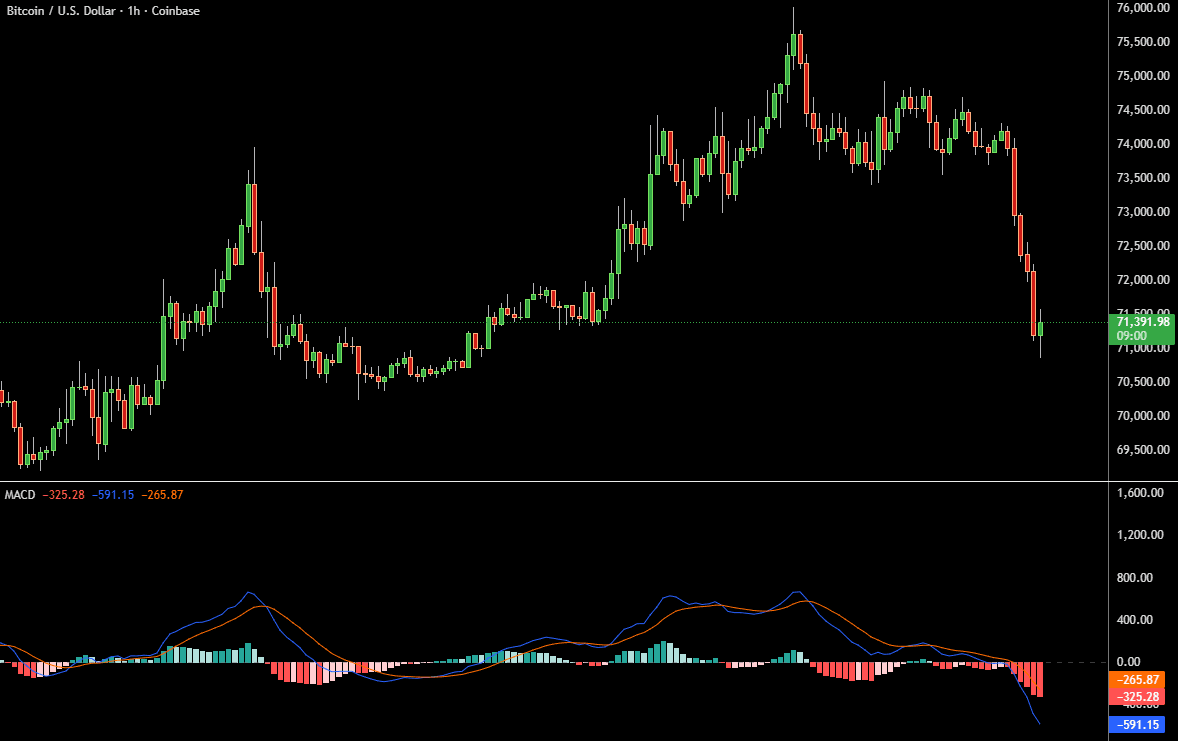
Type: Trend and momentum indicator
Best for: Momentum shifts and trend confirmation
Strength: Helps identify directional transitions
Limitation: Can react later than price
 Consensus Engine
MACD and Bollinger Bands are both common crypto trading indicators, but they focus on different market behavior. This guide explains what each one helps with, where each one is limited, and why traders often compare both instead of picking one in isolation.
MACD is mainly used to evaluate momentum shifts and trend-related changes, while Bollinger Bands are mainly used to understand volatility expansion, contraction, and relative price position.
Because momentum and volatility are different layers of market context, many traders compare MACD and Bollinger Bands together rather than treating them as interchangeable.
Type: Trend and momentum indicator
Best for: Momentum shifts and trend confirmation
Strength: Helps identify directional transitions
Limitation: Can react later than price
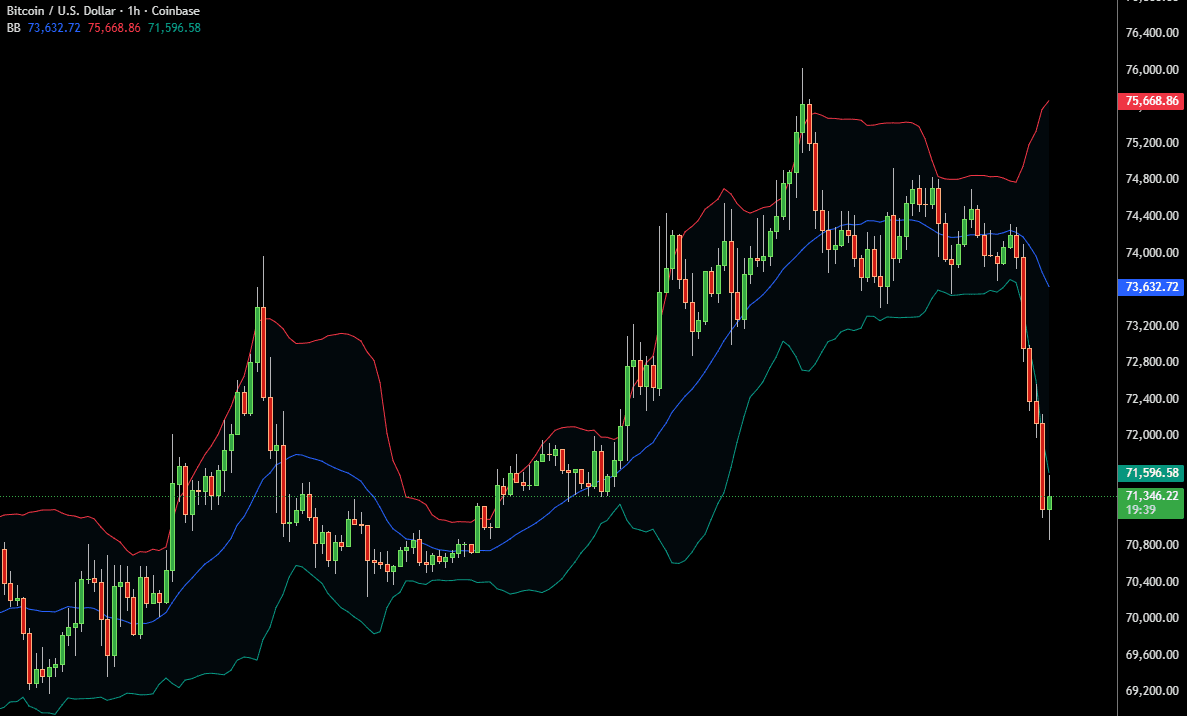
Type: Volatility indicator
Best for: Volatility context and price extremes
Strength: Shows expansion and contraction clearly
Limitation: Band touches alone do not confirm direction
MACD helps traders identify when directional momentum may be strengthening, weakening, or shifting. It is often used to compare momentum transitions with the broader trend.
Its limitation is that it still depends on moving averages, so part of the move may already be in progress before the signal becomes obvious.
Bollinger Bands help traders judge whether volatility is expanding, contracting, or pushing price toward relative extremes. They are often used for squeeze conditions, expansion phases, and contextual price positioning.
Their limitation is that price touching an upper or lower band does not automatically mean reversal or continuation without additional context.
There is no universal winner because the tools answer different questions. MACD is often better for directional momentum shifts, while Bollinger Bands are often better for volatility context and price placement within that volatility.
That is why many traders do not treat this as MACD versus Bollinger Bands in a strict sense. Instead, they compare both and look for whether volatility context supports the momentum read.
Using both can help reduce incomplete readings. MACD may show whether momentum is changing, while Bollinger Bands may show whether volatility conditions support expansion, contraction, or a stretched move.
When momentum and volatility context line up, traders often get a more useful read than they would from either tool alone. For a broader workflow, see how to combine crypto indicators, review the crypto consensus indicator, or explore the crypto indicator dashboard.
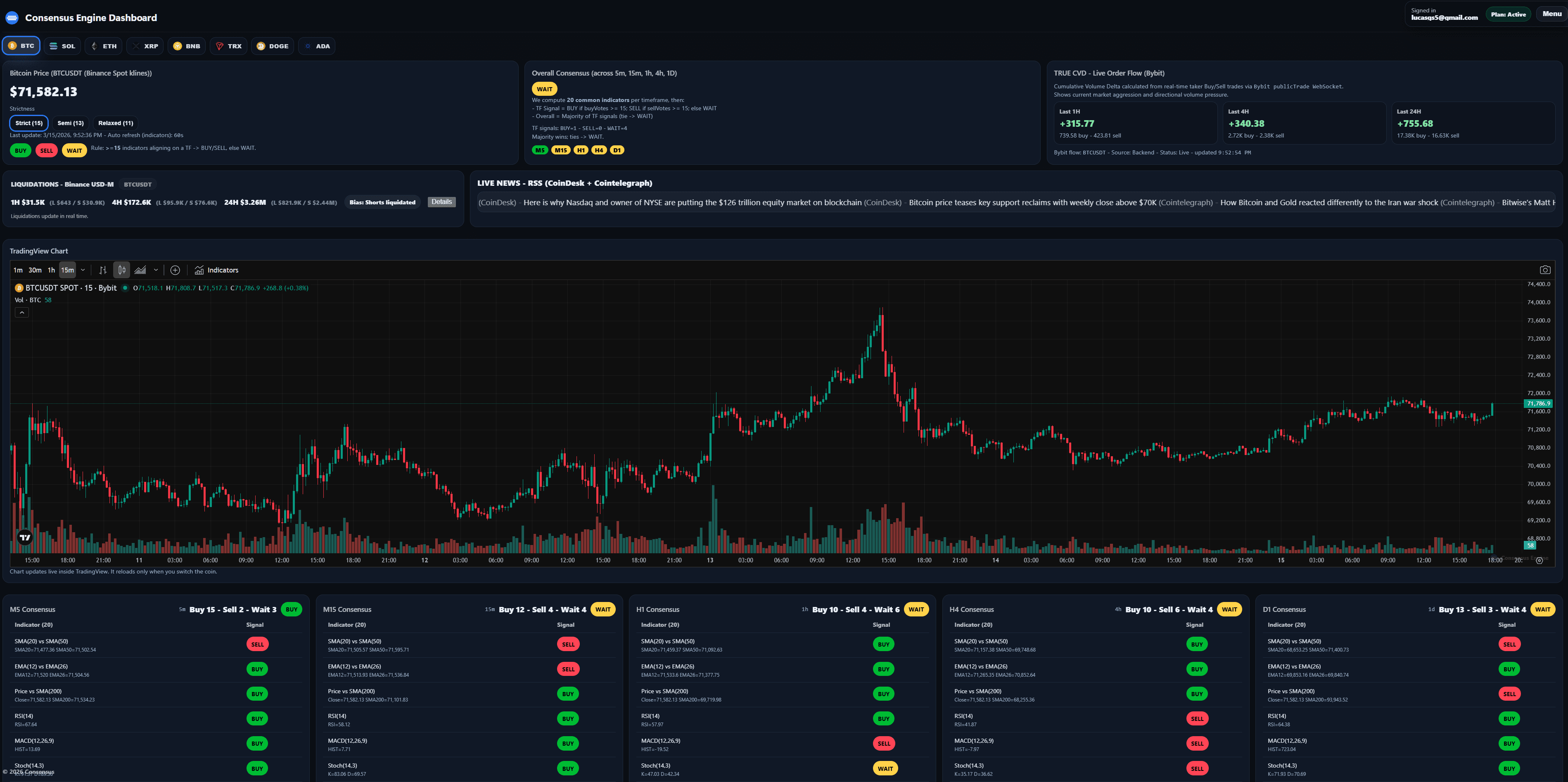
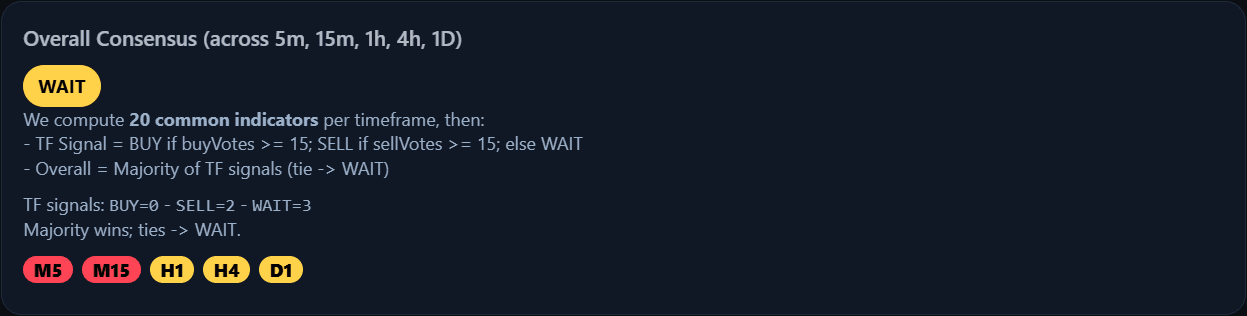
Consensus Engine is built for this exact problem. Instead of forcing traders to compare MACD, Bollinger Bands, and other indicator readings one by one, the dashboard organizes 20 indicators across 5 timeframes into one structured market view.
That makes it easier to judge whether momentum, volatility, and broader context are aligned without jumping between multiple charts and tools.
Keep different signal types together so agreement, conflict, and confirmation are easier to read.
Compare short-term movement with broader structure across M5, M15, H1, H4, and D1 in one workflow.
Use TRUE CVD when you want another read on whether participation is supporting the move.

Neither is universally better. MACD is usually used for momentum shifts, while Bollinger Bands are usually used for volatility context and relative price extremes.
Yes. Many traders use MACD and Bollinger Bands together because one focuses on momentum and the other focuses on volatility.
They do not measure the same thing. Bollinger Bands update with price and volatility conditions, while MACD is typically used to read broader momentum shifts.
Yes. The Quick Preview shows a limited blurred view with a short live preview of the selected crypto.
Consensus Engine helps traders organize MACD, Bollinger Bands, and other indicator readings into one clean dashboard.
Start with the broader guide to indicator categories, use cases, and limitations.
Review the indicator types traders compare most often when building a market view.
See how traders use different indicator roles together instead of relying on one isolated reading.
Learn how Consensus Engine summarizes multiple technical readings into a structured view.
Explore the main product guide for the dashboard that organizes alignment across indicators and timeframes.