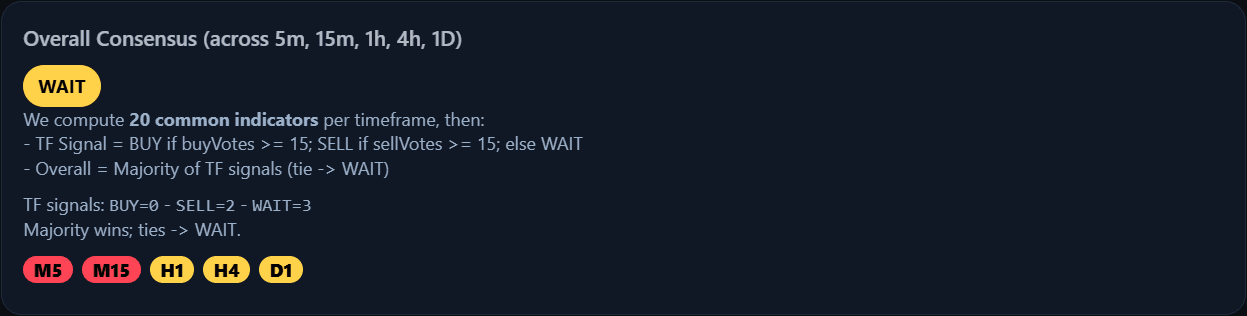
Indicator consensus panel
Consensus gives traders a structured market view by showing whether multiple indicators are aligned or producing a weaker mixed reading.
 Consensus Engine
Consensus Engine is a crypto market analysis platform that helps traders read market conditions in a more organized way by combining indicator alignment, optional flow confirmation, liquidations, and live market context into one dashboard. The full crypto indicator dashboard explains how those pieces fit together.
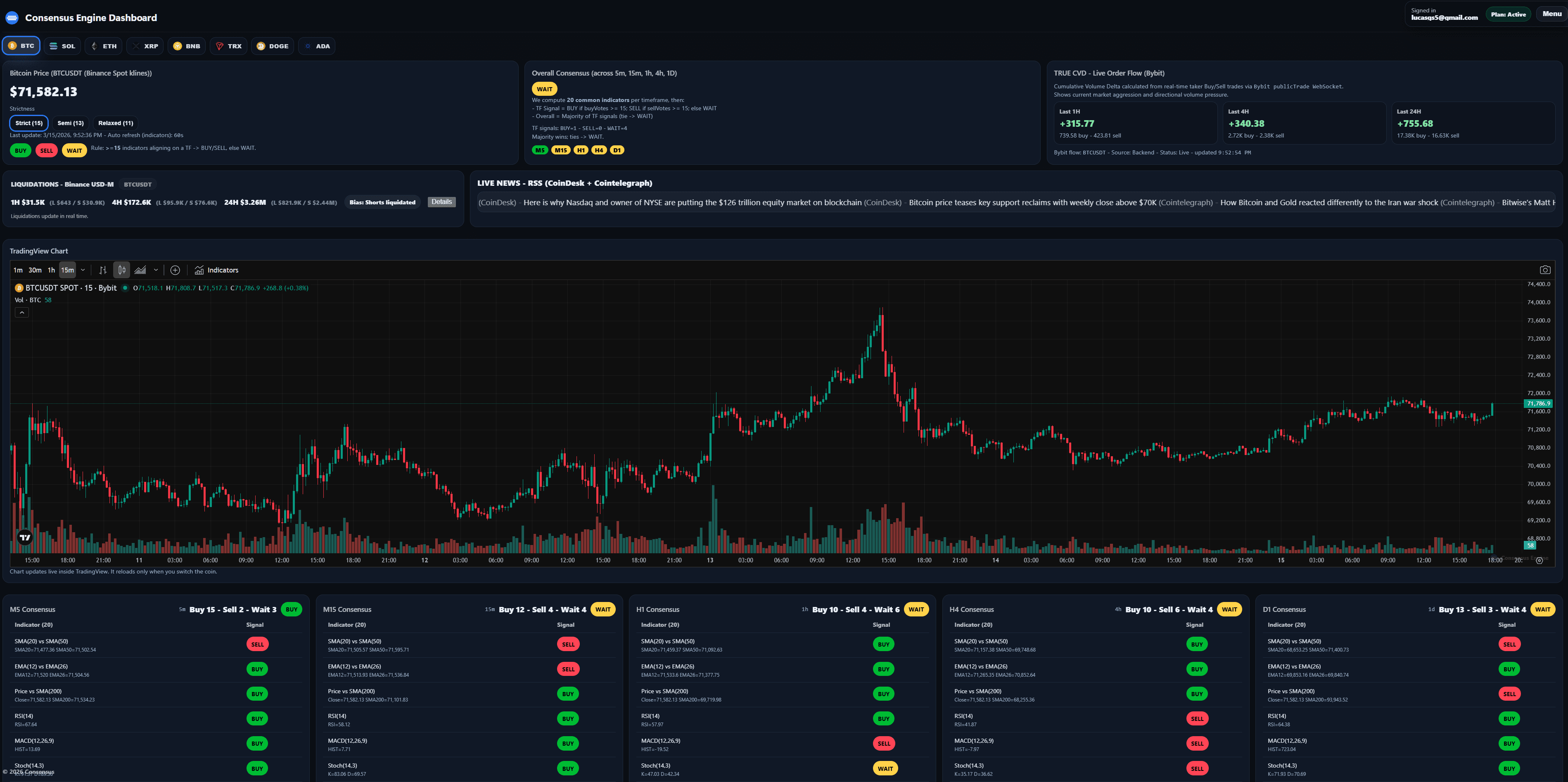
The goal is not to sell signals. The dashboard is designed to help traders interpret market conditions and alert quality with surrounding context in one workflow.
Alerts are easier to evaluate when they are organized in context. A market analysis dashboard helps traders compare alignment, participation, and surrounding market conditions instead of treating each alert in isolation. That is especially useful when paired with a multi-timeframe trading dashboard.
Consensus Engine organizes indicator analysis into distinct panels so traders can move from the core setup to confirmation and context without scattering their workflow.
Consensus gives traders a structured market view by showing whether multiple indicators are aligned or producing a weaker mixed reading.
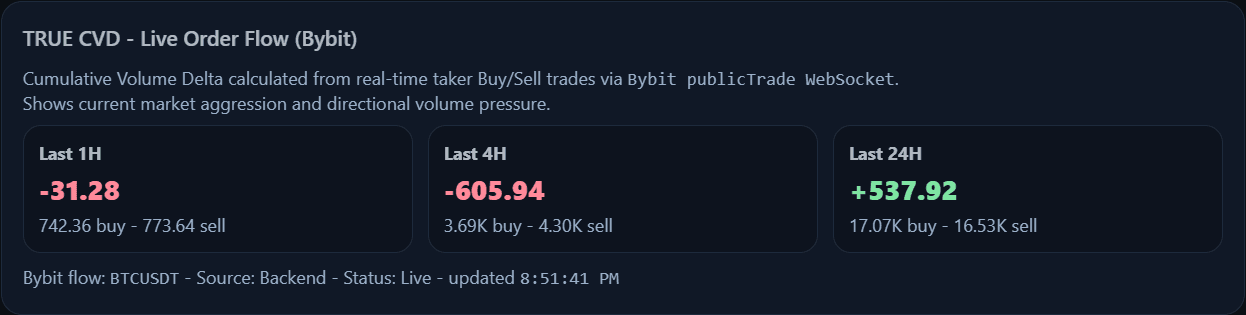
Optional TRUE CVD helps traders decide whether alert direction is being supported by participation instead of relying on consensus alone.
Liquidation data adds context around volatility so traders can see when an alert may be influenced by aggressive forced positioning.

The news feed helps traders avoid reading an alert in isolation when headlines may be shaping the move underneath the setup.

Consensus Engine groups the analysis process into a cleaner sequence so traders can review the setup, check confirmation, and weigh context before acting. The underlying crypto consensus indicator page explains the voting model behind that first layer.
Alerts begin with multi-indicator alignment so traders can see whether the setup has broader technical agreement behind it.
TRUE CVD adds a confirmation layer when traders want to check whether participation supports the alert.
Liquidation data helps explain when short-term alert quality may be affected by forced movement and volatility spikes.
Headline context helps traders interpret whether the alert is moving inside a more stable market environment or a fast-changing one.
A trader can use the dashboard to move through the signal in stages rather than reacting to one alert in isolation.
Start by checking whether the market is producing broad indicator agreement or whether the alert still looks mixed and less convincing.
Use TRUE CVD when needed to decide whether buying or selling pressure is supporting the alert direction.
Review liquidation and news context before acting so the alert is judged inside the market environment that surrounds it.
No. Consensus Engine is an informational dashboard for reading market conditions and alerts. It does not place trades or run automated execution for you.
Alerts are organized through consensus, optional TRUE CVD confirmation, liquidation data, and live market context so traders can review more than one input at a time.
Yes. The Quick Preview gives a limited look at the dashboard so traders can understand the alert workflow before subscribing.
See how timeframe alignment supports the alerts workflow by showing whether momentum is broad across M5 to D1.
Learn more about the consensus model that powers the alert-reading layer inside the dashboard.
Consensus Engine helps traders organize alignment, participation, and surrounding market conditions into one cleaner dashboard workflow.
Informational tool only. Not financial advice. No trade execution or portfolio management.