Type
Trend indicator
 Consensus Engine
Moving averages smooth price data and help traders judge broader direction, trend bias, and structure.
Moving averages smooth price over time to help traders see broader directional bias more clearly.
They do not measure momentum directly. Their main job is to frame structure, trend direction, and relative price position versus the average.
Traders often use moving averages for trend filtering, pullback structure, crossover frameworks, and support or resistance context.
They are commonly paired with RSI or volume so trend can be evaluated alongside momentum or participation.
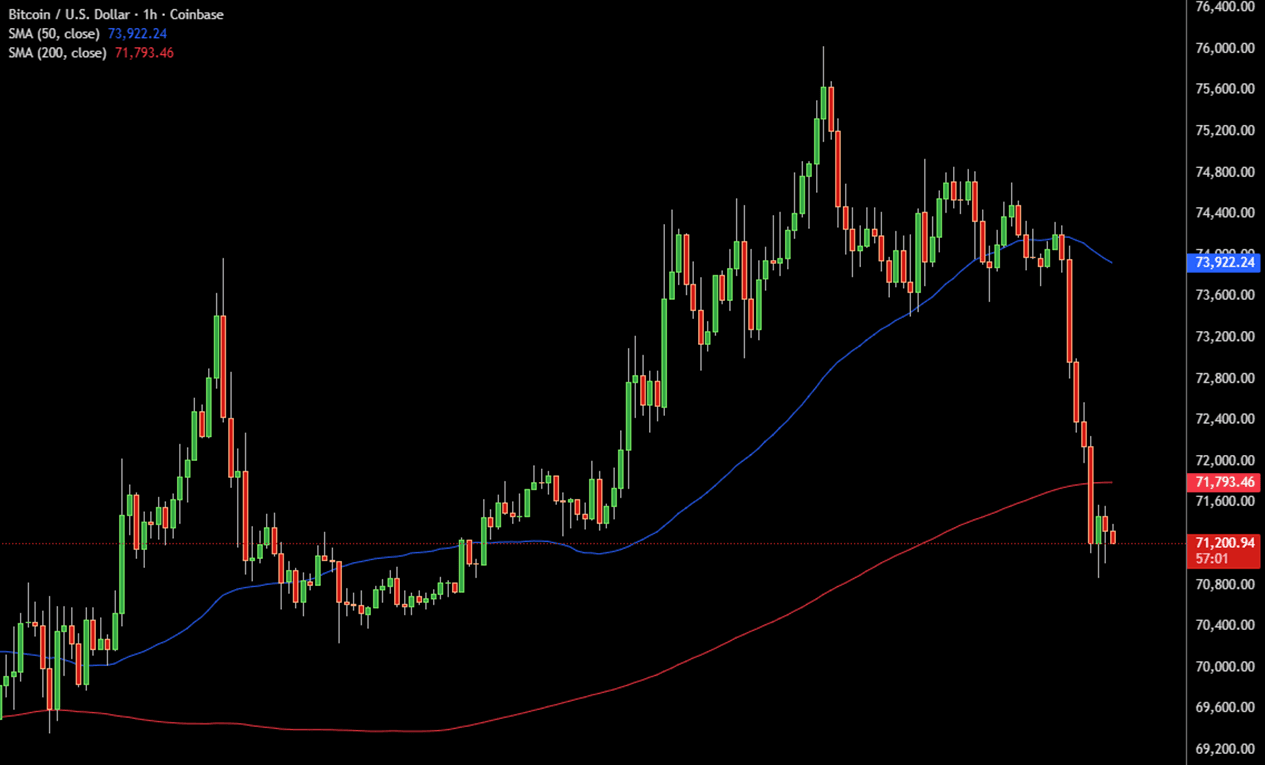
A typical moving-average chart overlays one or more averages directly on price to make broader direction easier to read.
Explore closely related indicator guides so momentum, trend, volatility, and participation signals stay connected inside the broader indicator library.
EMA, or Exponential Moving Average, is a moving average that reacts faster to recent price changes than SMA.
SMA, or Simple Moving Average, is a smoothing tool used to frame broader direction and reduce short-term price noise.
MACD is a trend and momentum indicator used to track directional shifts, momentum transitions, and broader confirmation.
RSI, or Relative Strength Index, is a momentum oscillator traders use to measure momentum and identify overbought or oversold conditions in crypto trading.
Supertrend is an ATR-based trend-following overlay that helps traders read directional bias and trailing trend logic directly on the chart.
Compare broader trend framing with momentum context.
Use this related comparison to see how other momentum tools differ from moving-average-driven analysis.
Consensus Engine keeps moving averages in a broader framework so traders can compare trend structure with momentum, volatility, and confirmation inputs.
That makes moving averages more useful than they would be when checked alone on a single chart.
Consensus Engine keeps trend, momentum, volatility, and participation tools together instead of scattering them across separate views.
M5 through D1 stay visible together, which helps traders compare short-term movement with broader context.
TRUE CVD adds another confirmation layer when traders want more than price-based indicators alone.
Moving averages smooth price data to show broader direction and trend structure.
Yes. Moving averages react after price because they are based on past data.
Because they are best at trend framing, but trend alone does not explain momentum, volatility, or participation.
Consensus Engine helps traders organize Moving Averages, related indicators, and multi-timeframe context in one structured dashboard. For the broader authority page, continue to crypto indicators.