Type
Participation indicator
 Consensus Engine
Volume measures market activity and is often used to judge whether a move is supported by participation.
Participation indicator
Move confirmation
Shows whether price is supported by activity
Needs price context to interpret direction
Volume measures how much trading activity is taking place. Traders use it to judge whether price movement is being supported by participation.
It is not a directional indicator by itself, but it often adds confirmation to breakouts, trend continuation, or momentum pushes.
Traders often use volume to confirm breakouts, detect weak moves, and compare price movement with underlying activity.
Volume is commonly paired with MACD, moving averages, or momentum indicators to see whether the move has real support behind it.
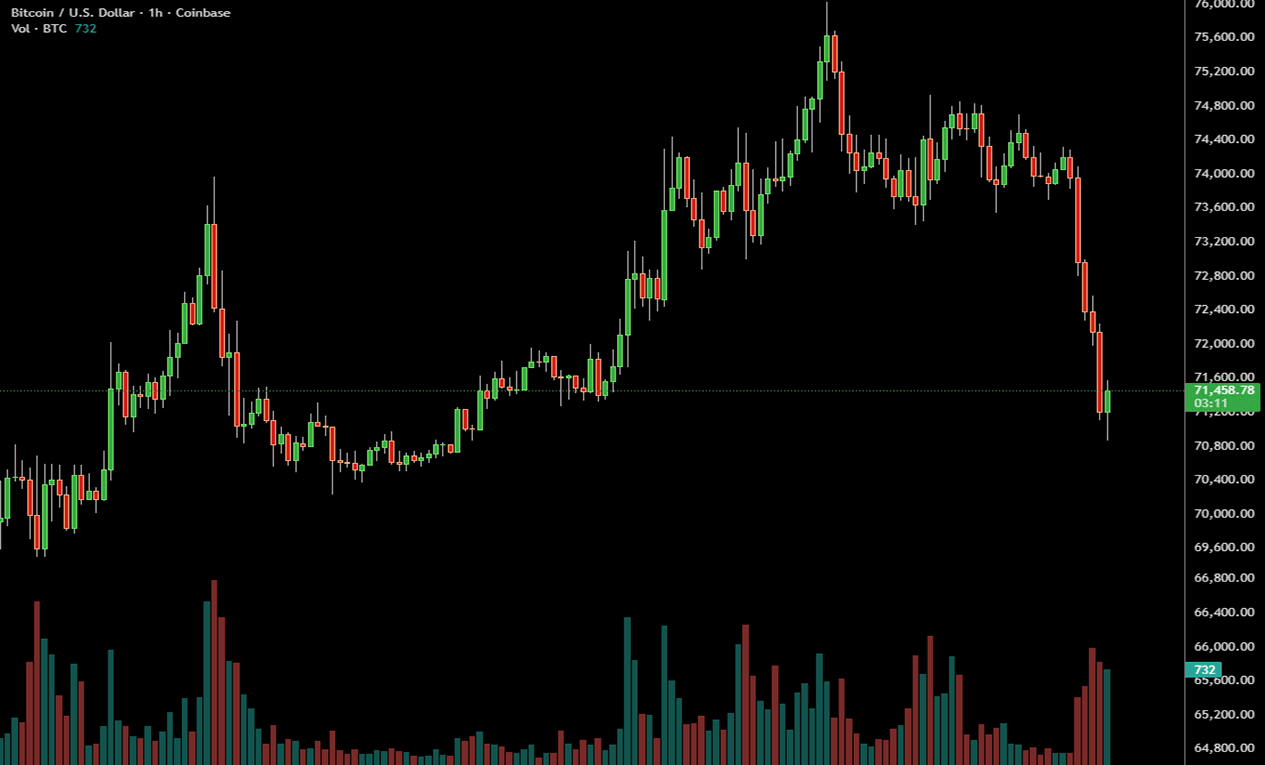
A typical volume chart view shows price above and participation bars below so traders can compare market movement with activity.
Explore closely related indicator guides so momentum, trend, volatility, and participation signals stay connected inside the broader indicator library.
OBV, or On-Balance Volume, is a cumulative volume indicator used to compare participation flow with price movement.
VWAP, or Volume Weighted Average Price, tracks the average traded price weighted by volume and is often used as an intraday fair-value reference.
MACD is a trend and momentum indicator used to track directional shifts, momentum transitions, and broader confirmation.
MFI, or Money Flow Index, is a momentum oscillator that blends price movement with volume-style money flow input to help traders judge strength and extremes.
Donchian Channels plot the highest high and lowest low over a lookback period to help traders frame breakout boundaries and range expansion.
Compare directional momentum analysis with participation confirmation.
Review another comparison that shows how different indicator categories answer different questions.
Consensus Engine keeps participation context beside momentum, trend, and volatility tools so volume does not need to be interpreted in isolation.
This makes it easier to judge whether market activity supports the broader signal set.
Consensus Engine keeps trend, momentum, volatility, and participation tools together instead of scattering them across separate views.
M5 through D1 stay visible together, which helps traders compare short-term movement with broader context.
TRUE CVD adds another confirmation layer when traders want more than price-based indicators alone.
Volume measures trading activity and is often used to confirm whether price movement is supported by participation.
Not by itself. Volume shows activity, but price context is still needed to interpret that activity.
Because volume is most useful when it confirms or questions a directional or momentum-based read.
Consensus Engine helps traders organize Volume, related indicators, and multi-timeframe context in one structured dashboard. For the broader authority page, continue to crypto indicators.