Type
Smoothing trend indicator
 Consensus Engine
SMA, or Simple Moving Average, is a smoothing tool used to frame broader direction and reduce short-term price noise.
SMA smooths price by averaging closing prices over a set period. Its main job is to show broader direction with less sensitivity than EMA.
Because it is smoother, SMA is often used when traders want a steadier trend reference rather than a fast-reacting line.
Traders often use SMA for broader trend bias, crossover frameworks, mean reference points, and slower support or resistance context.
It is commonly paired with RSI or other momentum tools so broader trend can be compared with current momentum conditions.
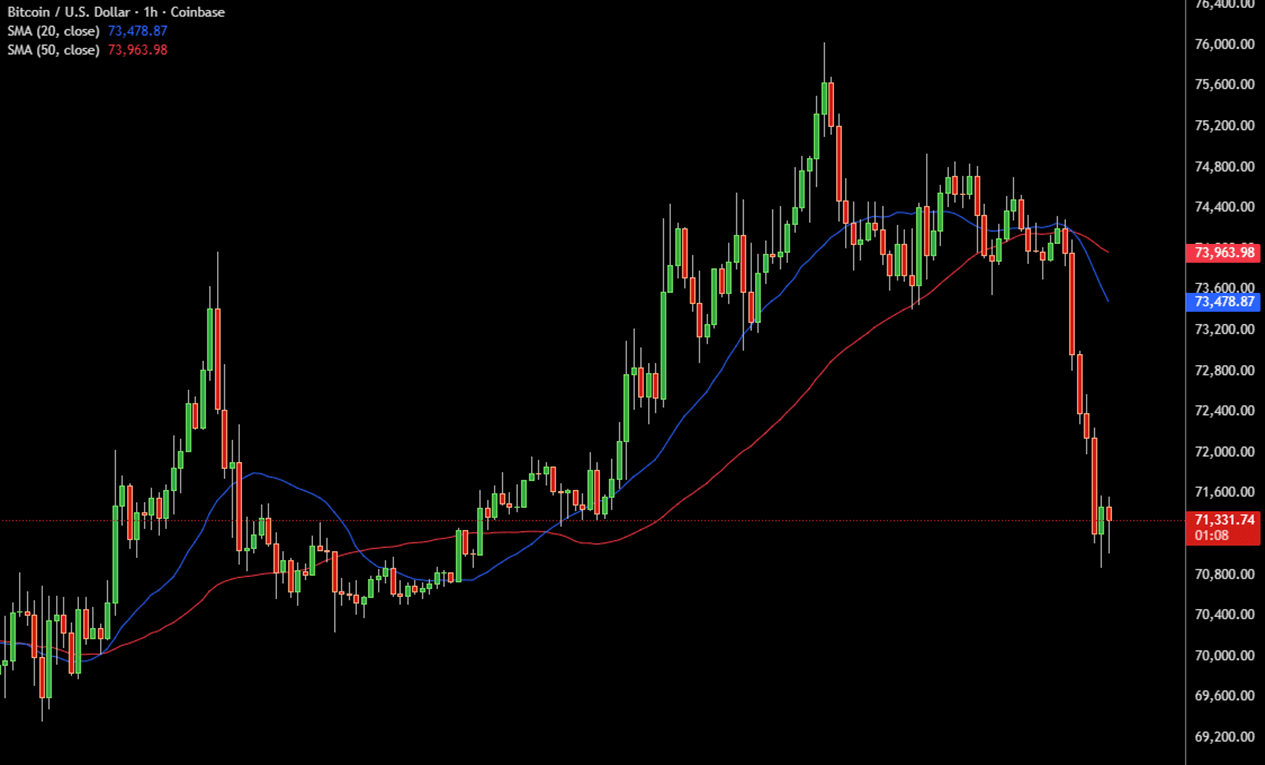
A typical SMA chart view overlays the SMA directly on price to provide a steadier reference line for broader direction.
Explore closely related indicator guides so momentum, trend, volatility, and participation signals stay connected inside the broader indicator library.
EMA, or Exponential Moving Average, is a moving average that reacts faster to recent price changes than SMA.
Moving averages smooth price data and help traders judge broader direction, trend bias, and structure.
MACD is a trend and momentum indicator used to track directional shifts, momentum transitions, and broader confirmation.
RSI, or Relative Strength Index, is a momentum oscillator traders use to measure momentum and identify overbought or oversold conditions in crypto trading.
ADX, or Average Directional Index, measures trend strength in crypto markets without telling traders whether the trend is up or down.
Compare slower trend-framing tools with momentum context.
Review another guide that helps frame how different indicator categories answer different questions.
Consensus Engine keeps SMA-style trend context beside faster indicators and confirmation tools so traders can see where slower structure agrees or conflicts.
That makes it easier to use broad trend framing without losing momentum and participation context.
Consensus Engine keeps trend, momentum, volatility, and participation tools together instead of scattering them across separate views.
M5 through D1 stay visible together, which helps traders compare short-term movement with broader context.
TRUE CVD adds another confirmation layer when traders want more than price-based indicators alone.
SMA smooths price over a set period to show broader direction with less short-term noise.
Yes. SMA is usually slower and smoother than EMA because it weights all data points evenly.
Because SMA is useful for broader trend framing, but it does not explain full momentum or confirmation context by itself.
Consensus Engine helps traders organize SMA, related indicators, and multi-timeframe context in one structured dashboard. For the broader authority page, continue to crypto indicators.